
What Is the Best Arc MMA Welder in China?
Choosing the best Arc Mma Welder in China is not just a matter of comparing prices. A workshop needs stable current, dependable arc starts, and a duty cycle suited to its daily workload. On a busy site, a few minutes of unnecessary cooling can disrupt the schedule. Small details matter.
The market is growing. MarketsandMarkets’ Welding Equipment Market report estimated the global market at USD 15.4 billion in 2023 and projected it to reach USD 20.7 billion by 2028. That broader figure covers multiple welding processes, not MMA welders alone. Still, it shows why buyers face many product claims and configurations. Numbers need context.
This guide looks at practical selection points: output range, duty cycle, electrode compatibility, input power, protection features, and after-sales support. For example, a machine rated for a 60% duty cycle at a stated current should not be assumed to deliver that rating at every setting. Check the test conditions and technical sheet. Also consider who will use it, and where. A compact inverter may suit repair work, while production tasks can demand different capacity and service arrangements. No single model fits every shop. Even so, clear specifications and verifiable support can narrow the choices. The best pick is the one that performs reliably under your actual working conditions—not merely the one with the boldest brochure.
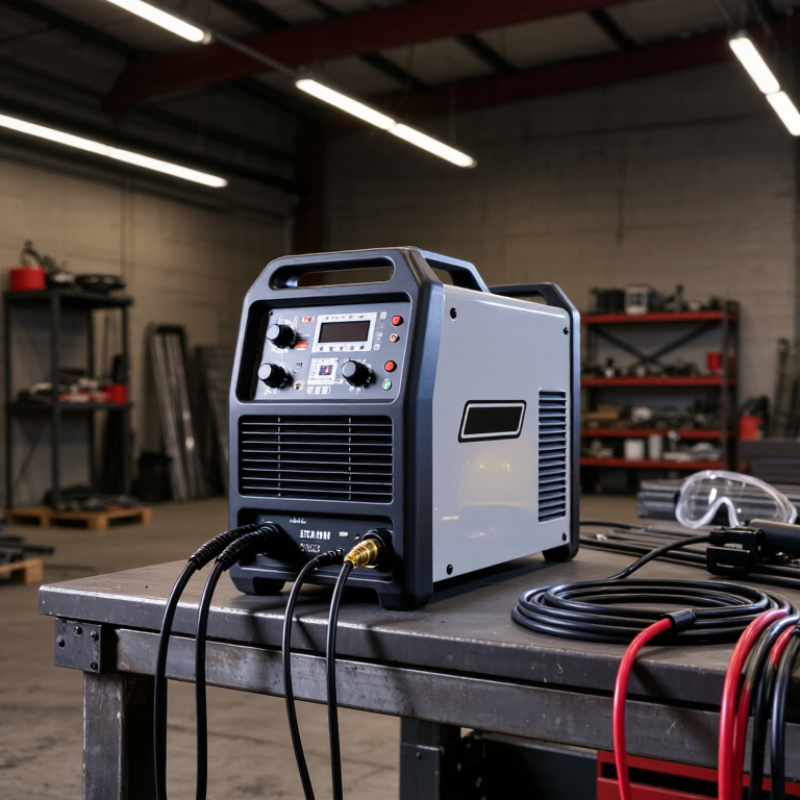
Understanding MMA Arc Welding and Its Typical Applications
Manual metal arc (MMA) welding, often called stick welding, uses an electric arc to melt a coated electrode and join metal. The coating creates shielding gas and a slag layer over the weld. It is a practical process for steel repairs, construction work, farm equipment, and maintenance on outdoor sites. The equipment is relatively portable, and changing electrodes is simple. Simple, but not effortless. Wind can still disturb the arc, and rusty or damp surfaces may lead to poor weld quality.
MMA is useful when workpieces are thick or access is awkward, such as repairing a steel bracket or joining structural sections. It is less suitable for very thin sheet metal, where heat can cause burn-through. The process also leaves slag that must be chipped away, and weld appearance depends heavily on operator skill. That part is easy to underestimate. For a welder used in China, compare its input power requirements, adjustable current range, and duty cycle with the available supply and expected workload. A higher current rating alone does not guarantee better results.
Tips: Choose an electrode suited to the metal and joint position, then follow its handling guidance. Keep the work area dry, wear a welding helmet and gloves, and ensure adequate ventilation. Practice on scrap of similar thickness before working on a finished part. Check the weld for visible gaps or uneven fusion; appearance is useful, but it cannot confirm internal quality.
What Is the Best Arc MMA Welder in China? - Understanding MMA Arc Welding and Its Typical Applications
There is no single best MMA (manual metal arc, or stick) welder for every job. The right choice depends on electrode size, material thickness, available power, portability, and the machine’s rated duty cycle. The ranges below are general selection guidance, not specifications for a particular product.
| Welder category | Typical output range | Typical power supply | Typical applications | What to look for |
|---|---|---|---|---|
| Portable inverter MMA | About 120–160 A; commonly used with smaller electrodes, subject to the machine’s rating | Often 220 V single-phase; confirm the input requirements on the nameplate | Home maintenance, light repairs, and occasional welding on mild steel | Low weight, stable low-current arc, suitable electrode range, and adequate input-circuit capacity |
| General-purpose inverter MMA | About 160–200 A; electrode choice and usable current depend on the machine and job | Commonly 220 V single-phase, with input-current and supply limits to check | Farm and workshop repairs, gates, brackets, and general mild-steel fabrication | A clearly stated duty cycle, reliable thermal protection, and compatibility with the intended electrode types |
| Higher-output workshop MMA | About 200–250 A; verify rated output and duty cycle before choosing larger electrodes | May use 220 V single-phase or a three-phase supply, depending on the design and output rating | More frequent fabrication and repair work, including heavier steel sections when properly prepared | Adequate input supply, output stability at the intended current, and a duty cycle suitable for the work rate |
| Industrial MMA system | Often 300 A and above; the required rating depends on electrode and production needs | Typically three-phase; confirm the exact voltage, phase, and installation requirements | Heavy fabrication, industrial maintenance, and sustained high-current work | High-current duty-cycle rating, suitable site power, cooling, service support, and workplace safety provisions |
| AC MMA transformer | Varies by machine; select by its rated current and compatible electrodes | Varies by design and installation | Basic stick welding where AC output is appropriate and portability is not a priority | Check electrode compatibility and arc characteristics; transformer machines are generally heavier than inverter types |
Practical selection checks
- Match current to the electrode and task: use the electrode manufacturer’s recommended current range, and follow the welding procedure for the material and joint.
- Check duty cycle at the stated current: a 60% duty cycle means up to 6 minutes of welding in a 10-minute period under the conditions specified for that rating; the remaining time is for cooling.
- Confirm the electrical supply: check input voltage, phase, frequency, and required circuit capacity. A higher output rating does not guarantee that a domestic circuit can supply it.
- Choose electrode compatibility deliberately: DC output supports many common stick electrodes, but the suitable polarity and electrode type depend on the electrode instructions and welding procedure.
- For general repair work: a well-rated inverter in the 160–200 A class is often a practical starting point when its input supply and duty cycle suit the job.