Why Choose a Power Loom Machine for Your Textile Business?
In today's competitive textile market, making informed decisions can set businesses apart. A power loom machine is an essential tool for efficiency and creativity. These machines offer speed and precision, leading to higher production rates. They enable manufacturers to produce complex patterns and designs, meeting diverse customer demands.
Investing in a power loom machine can significantly impact your production process. Many businesses struggle with outdated equipment that limits their capabilities. Re-evaluating your machinery is crucial. Switch to a power loom machine to enhance production quality and reduce labor costs. This machine can provide a better technological edge in the fast-changing textile industry.
Choosing the right equipment can feel overwhelming. However, knowing the advantages of a power loom machine is a first step. It’s not just about automation; it’s about improving craftsmanship. Many recognize the need for modern solutions but question the transition process. Embrace the journey toward modernization while considering potential challenges.
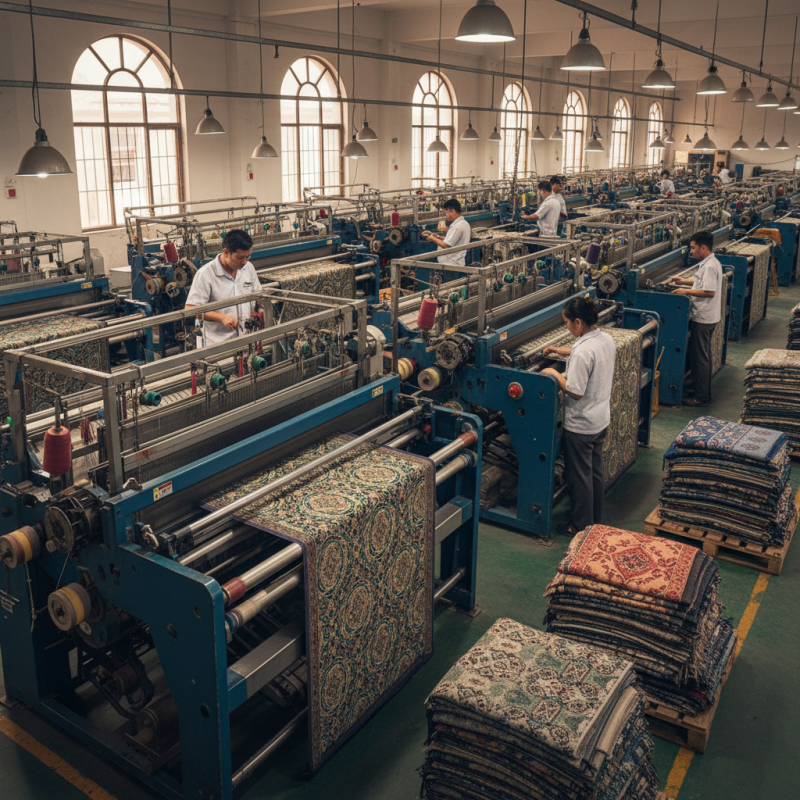
Advantages of Using Power Loom Machines in Textile Production
Power loom machines are game changers in the textile industry. One major advantage is their speed. Unlike handlooms, which can produce a limited number of fabrics daily, power looms can operate continuously. This efficiency translates to higher output and more profit. Manufacturers appreciate this capability, especially during peak seasons.
These machines also maintain consistent quality. With advanced technology, power looms reduce human error. Fabrics produced are uniform in appearance, which is crucial for market acceptance. However, it’s important to remember that not all power looms are created equal. Quality may vary based on maintenance and operation experience.
Moreover, power loom machines provide flexibility. They can handle various fabric types, from cotton to synthetic materials. This versatility offers businesses a competitive edge. However, initial investment costs can be high. It’s essential to weigh these costs against potential benefits. Regular training for operators is another aspect that requires attention. Efficient usage leads to optimal results.
Why Choose a Power Loom Machine for Your Textile Business? - Advantages of Using Power Loom Machines in Textile Production
| Feature |
Description |
Advantage |
| Increased Production Speed |
Power looms can operate at a higher speed than traditional hand looms. |
Allows for greater output in less time, increasing overall efficiency. |
| Consistency in Quality |
Produces textiles with uniform tension and weave patterns. |
Reduces defects and enhances product quality, leading to higher customer satisfaction. |
| Diverse Fabric Options |
Can handle various types of fabrics including complex weaves. |
Enables businesses to cater to different markets and expand product lines. |
| Reduced Labor Costs |
Automatic operations require fewer operators compared to hand looms. |
Cuts down on labor expenses, increasing profitability. |
| Durability and Longevity |
Built with robust materials designed for heavy-duty use over time. |
Minimizes maintenance costs and increases production reliability. |
Cost Efficiency of Power Looms Compared to Traditional Weaving Methods
Power looms are transforming the textile industry. Their cost efficiency stands out compared to traditional weaving methods. With power looms, manufacturers create fabric faster. This speed significantly reduces labor costs. Compared to manual weaving, power looms require fewer workers. The machinery can operate continuously, producing consistent quality. Over time, this leads to substantial savings.
Investing in power looms can be daunting. The upfront cost is higher than manual looms. Yet, the long-term benefits often outweigh initial expenses. Operational costs decline with increased production. For small businesses, making this shift may feel risky. However, the potential for higher profit margins is appealing. It requires careful planning to achieve a smooth transition.
Power looms also offer flexibility. They can produce various designs with minimal adjustments. This adaptability can meet diverse customer needs. However, reliance on technology can lead to challenges. Breakdowns may disrupt production, requiring reliable maintenance. Business owners must balance automation with skilled workforce training. Planning ahead is vital for ensuring sustained growth.
Improved Fabric Quality and Consistency with Power Loom Technology
Power loom technology revolutionizes fabric production. This advanced machinery enhances fabric quality and consistency, key factors for any textile business. According to a report from the Textile World Journal, manufacturers utilizing power looms see a 30% increase in fabric uniformity. This consistency in quality meets the high demands of today's market.
The precision of power looms contributes significantly to fewer defects. Traditional methods can result in variation due to human error. Studies indicate that power looms reduce production errors by up to 25%. This reliability fosters better customer satisfaction and reduces waste. However, businesses must continually evaluate machinery efficiency. Overreliance on technology can lead to complacency.
Investing in power loom technology also allows for more intricate designs. Many manufacturers report creating complex patterns that were previously unattainable. This opens doors to new markets and clients. Nonetheless, it is essential to remain attentive to ongoing maintenance. Neglecting this can counteract the benefits of high-tech machinery. Continuous training for operators ensures that businesses maximize these advancements effectively.
Increased Production Speed and Capacity in Textile Manufacturing
In the textile manufacturing industry, speed and capacity are crucial. Power loom machines play a vital role in enhancing both. According to a recent industry report, the use of power looms can increase production speed by up to 50%. This improvement significantly reduces the time required to complete orders.
With a power loom, manufacturers can handle larger volumes of fabric. This capability allows for meeting higher market demands without compromising quality. The advanced technology incorporated in these machines enables precise control over weaving processes. It decreases the chances of errors, saving materials and time. A report by the Textile Machinery Association noted that businesses adopting power looms reported a 30% reduction in waste.
However, power looms require significant investment. This cost can be a barrier for smaller enterprises. Maintenance and technical training also present challenges. Still, the benefits often outweigh these issues. Balancing initial costs with long-term gains is a crucial consideration for sustainable growth in the textile sector.
Production Speed and Capacity of Traditional vs. Power Loom Machines
Versatility and Customization Options of Power Loom Machines
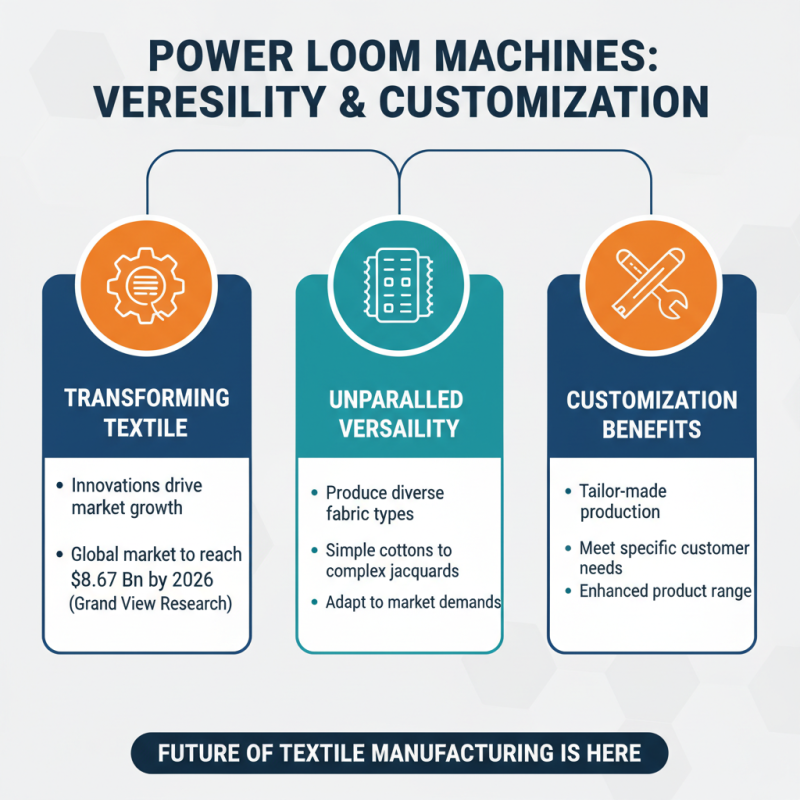
Power loom machines have transformed the textile industry with their versatility and customization options. According to a report by Grand View Research, the global textile machinery market is projected to reach $8.67 billion by 2026, driven largely by innovations in loom technology. This versatility allows businesses to produce various fabric types, from simple cotton weaves to complex jacquards, meeting diverse customer demands.
Customization is a significant advantage. Operators can easily adjust settings such as speed, weave patterns, and tension. This flexibility allows for quick adaptation to market trends, helping businesses stay competitive. For instance, a study from the Textile World highlights that manufacturers who utilize power looms can reduce production time by up to 30%. However, some might find the initial investment in technology daunting. Transitioning from traditional methods can require training and adjustment, which may pose challenges.
Moreover, integrating power loom machines into existing production lines isn’t always straightforward. Businesses must consider their specific needs and capabilities. They must evaluate their workforce's readiness to manage advanced technology. Despite these challenges, the long-term benefits often outweigh the initial hurdles, paving the way for future growth.