How to Operate a Jacquard Machine for Textile Production?
The textile industry has seen significant advancements over the years, with the jacquard machine standing out as a revolutionary tool. According to the global textile machinery market report, the jacquard machine accounts for nearly 20% of the industry's machinery segment. This remarkable machine allows for intricate designs, elevating fabric quality and complexity.
Operating a jacquard machine requires both technical know-how and creative vision. Its programmable features enable the weaving of detailed patterns that captivate consumers. However, the learning curve can be steep. Many operators struggle with programming and maintenance aspects, leading to production delays and increased costs.
Understanding the functionality of a jacquard machine is crucial for optimizing its use. Regular troubleshooting and skill enhancement can mitigate common issues. The investment in time and resources often pays off, ultimately contributing to greater efficiency and innovation in textile production. Embracing this technology opens doors to new possibilities, but it demands continuous learning and adaptation.
Understanding the Basics of Jacquard Machines in Textile Production
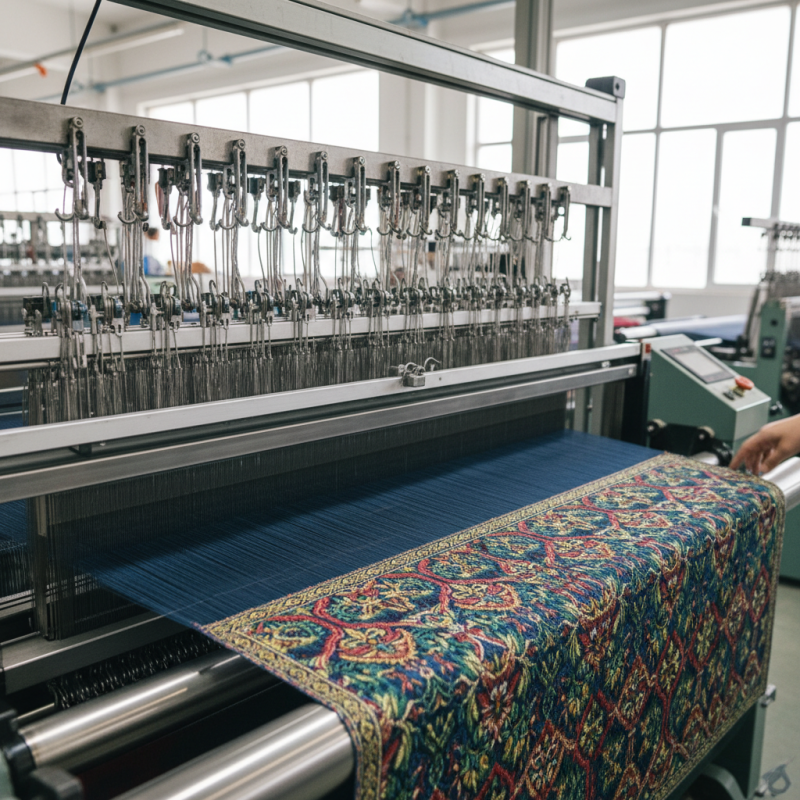
The Jacquard machine revolutionized textile production by allowing complex patterns to be woven into fabrics. It utilizes a series of punched cards to control individual warp threads, creating intricate designs. This innovation opened up new possibilities for designers and manufacturers alike.
In textiles, the Jacquard machine accounts for about 30% of the global weaving industry. A 2019 report indicated that demand for decorative fabrics surged by 15% due to consumer preference for unique designs. However, operating a Jacquard machine requires skilled labor.
Training programs are essential but often lack comprehensiveness. Many operators face challenges in understanding the machine's programming, leading to frequent errors.
Moreover, maintenance is another critical aspect. A poorly maintained machine can result in costly downtime. Data suggests that operating costs can rise by 20% without regular servicing. Navigating these complexities is essential for maximizing production efficiency. The potential for creativity is immense, but it isn’t always harnessed effectively. There is room for improvement in operator training and machine upkeep.
Components of a Jacquard Machine and Their Functions
The Jacquard machine is a fascinating piece of textile technology. Its main components work together to create intricate patterns on fabric. The heart of the machine is the control unit, which uses punch cards to dictate the weaving process. This allows for complex designs to be produced with precision. Operators must be familiar with this system, as errors in setup can lead to disappointing results.
Another vital part is the heddles, which lift the warp threads. Correctly threading the heddles is crucial, yet it can be a tedious task. Many operators struggle with this step and miss out on beautiful patterns. Additionally, the warp beam holds the yarn under tension. If the tension is inconsistent, it may lead to a flawed weave. Regular adjustments are necessary to maintain quality.
The shuttle carries the weft yarn across the warp threads. Understanding how the shuttle moves is key to ensuring smooth operation. Many users report difficulties with the shuttle's timing or angle. It can be frustrating when things don’t align as intended. Mastering these components can take time. Each mistake offers a lesson in crafting textiles with a Jacquard machine.
Setting Up the Jacquard Machine for Operation
Setting up a Jacquard machine requires careful attention to detail. The first step involves selecting the right loom for the fabric type you intend to produce. Check that the machine is clean. Dust and lint can affect performance. Pay attention to thread tension. Improper tension can ruin a fabric’s appearance.
Next, prepare the warp and weft threads. They need to be positioned correctly. Any misalignment can lead to weaving errors. Ensure the warp is loaded evenly on the beams. Use the controls to set the desired patterns. It can be tricky to get it right the first time. Don’t rush this step.
Monitor the machine as it operates. Keep an eye on the output. Look for any irregularities or missed picks. Adjustments might be necessary along the way. If things don’t look perfect, it’s okay to pause the process. Take a moment to reflect on the setup. Analyzing mistakes helps improve future operations. Remember, each setup is a learning opportunity.
Programming and Designing Patterns for Jacquard Weaving
Programming and designing patterns for Jacquard weaving is both an art and a science. A robust understanding of textile design software is essential. These tools allow for intricate pattern creation, harnessing the machine's capabilities. An industry report from Textile World states that over 70% of manufacturers utilize advanced software for Jacquard design. This percentage indicates the industry's shift towards technology-driven solutions.
Creating patterns involves mapping out how threads interlace. Each thread's movement must be meticulously planned. An error in programming can result in defective patterns, leading to waste. According to research from the Journal of Textile Science, up to 15% of fabric produced can end up as scrap due to design flaws. This statistic underscores the importance of precision. Many designers still struggle with adequately visualizing end results before production, which can hinder efficiency.
Designers often face challenges when translating creative ideas into machine-readable formats. Adaptability is key. Adjustments may be necessary during the production phase, which can cause delays. Keeping abreast of the latest design technologies can help alleviate these issues. However, balancing creativity with technical feasibility remains a recurring theme in Jacquard weaving.
How to Operate a Jacquard Machine for Textile Production? - Programming and Designing Patterns for Jacquard Weaving
| Process Step |
Description |
Tools/Software |
Time Required (Hours) |
| Pattern Design |
Create the desired pattern using CAD software. |
Adobe Illustrator, CorelDRAW |
2 |
| Programming the Machine |
Input the designed pattern into the Jacquard machine. |
Jacquard Software, Loom Control Software |
1 |
| Setting Up the Loom |
Prepare the loom with the correct yarn and configurations. |
Loom Manual, Yarn Knowledge |
1.5 |
| Testing the Machine |
Run a test pattern to ensure everything works correctly. |
Testing Fabrics |
0.5 |
| Production |
Start producing the final product based on the patterns. |
Jacquard Loom |
Varies |
Maintaining and Troubleshooting Jacquard Machines for Optimal Performance
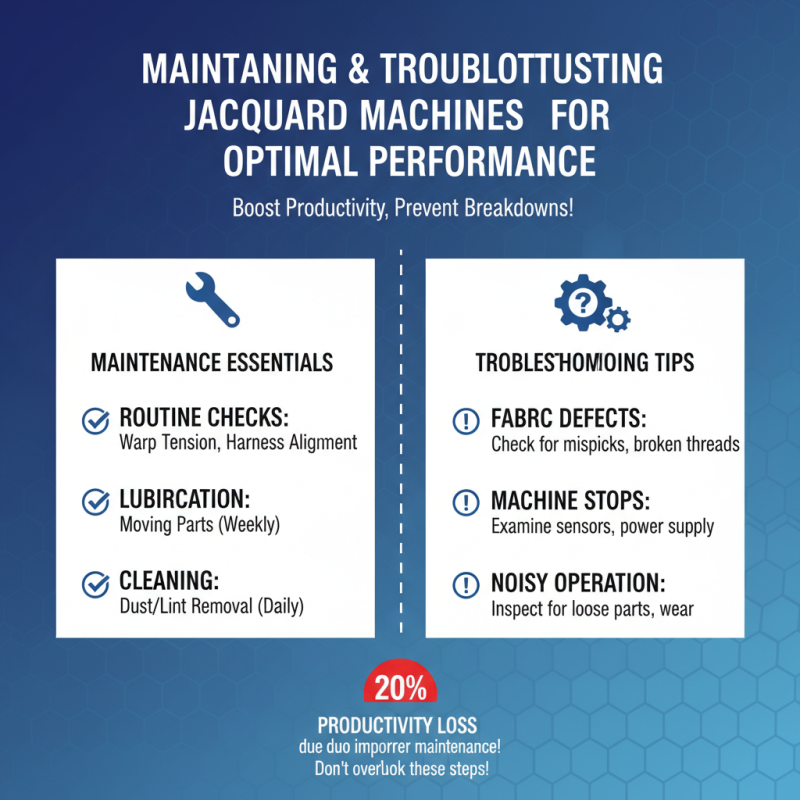
Maintaining a Jacquard machine is essential for optimal textile production. Regular maintenance helps prevent breakdowns and improves efficiency. According to industry reports, improper maintenance can lead to a 20% reduction in productivity. Routine checks should include examining the warp tension and ensuring the harnesses are correctly aligned. These tasks are often overlooked but can greatly affect fabric quality.
Troubleshooting common issues is crucial. For instance, if the machine skips stitches, it may indicate wear on the needles or misalignment of the drive system. A study revealed that 30% of machine downtime is due to these minor yet impactful problems. Operators should keep an eye on the control panels for error codes. Ignoring these signals can lead to bigger malfunctions.
Moreover, environmental factors can affect machine performance. Humidity and temperature variations may cause thread swelling or shrinkage. These changes can disrupt the weaving process. Regular calibration checks are necessary to combat these challenges. Addressing these details may seem tedious, but they can prevent costly disruptions. Reflecting on maintenance practices is vital for sustainable operation.