Choosing the right Breathable Shirt manufacturer can shape comfort, product quality, and long-term buyer trust. For global buyers, the decision involves more than fabric softness or attractive pricing. It requires evidence about fiber selection, air permeability, moisture management, stitching, dye safety, and production consistency. A shirt that feels cool in a showroom may perform differently under intense sunlight, repeated washing, or humid travel conditions.
George Havenith, a respected researcher in clothing physiology, has emphasized that clothing is “the interface between the body and the environment.” This principle matters when evaluating Chinese suppliers. A capable factory should explain how its polyester, nylon, cotton, bamboo, or blended fabrics move heat and perspiration away from the skin. It should also provide practical testing information, such as moisture-wicking results, fabric weight, shrinkage rates, colorfastness, and seam strength. Certifications can support trust, but they should be verified rather than accepted at face value.
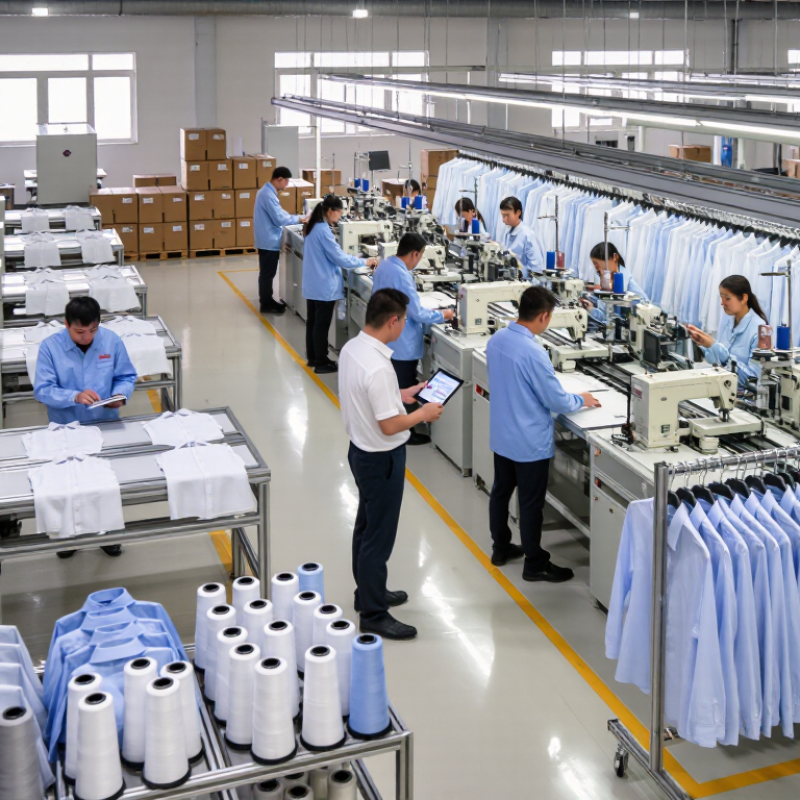
Factory visits, sample testing, and transparent communication remain valuable. Ask to see fabric rolls, cutting rooms, sewing lines, inspection stations, and packing areas. Compare the same shirt after several wash cycles. Small details reveal much: uneven collar binding, loose threads, trapped heat around the underarms, or labels that irritate the neck. No supplier is perfect, and even experienced manufacturers may show inconsistent batches. That limitation deserves honest attention. This guide introduces leading China Breathable Shirt manufacturers and explains how global buyers can assess experience, technical capability, quality control, customization, and dependable export support.
A breathable shirt manages heat, moisture, and airflow close to the skin. Fabric choice matters, but fabric weight is not the whole story. Lightweight cotton can feel comfortable in dry heat. However, it may stay damp during long, humid travel. Blended fabrics can dry faster when the construction remains open and flexible. Mesh panels and small ventilation zones may improve airflow around the back and underarms.
Reliable manufacturers test these details before production. They can measure air permeability, moisture transfer, shrinkage, and colorfastness. A practical sample should be worn, washed, and inspected after repeated use. Check the collar, sleeve openings, and side seams. Tight stitching can restrict airflow, even when the fabric looks breathable. Poor finishing may also create a waxy surface that traps heat.
Global markets add more variables. A shirt designed for coastal humidity may feel too thin in cooler regions. Customers in sunny areas may value dense fabric with ultraviolet protection. Buyers also expect stable sizing after washing. This is where careful sampling becomes important. One sample is rarely enough. Minor differences in yarn, dyeing, or sewing can change the final result. I have found that soft hand-feel can sometimes mislead buyers. It does not always indicate better ventilation. Manufacturers should provide test records, care instructions, and clear tolerance ranges. Breathability is practical performance, not just a marketing description.
Chinese shirt manufacturers increasingly combine breathable fabrics with practical garment engineering for global buyers. Cotton remains widely used because it feels soft and absorbs moisture. Linen offers strong airflow and a naturally textured surface. Blended fabrics can improve wrinkle resistance, durability, and drying speed. Bamboo-based viscose is also selected for its smooth touch, although buyers should verify fiber composition and performance claims.
A lighter fabric is not always cooler. That assumption often fails. Manufacturers may use open-weave structures, mesh panels, perforated underarm sections, and moisture-wicking finishes to improve comfort. Some factories also adjust yarn thickness and fabric density for different climates. During product evaluation, experienced buyers should request air-permeability data, moisture-management results, shrinkage tests, and colorfastness reports. Factory samples can feel excellent, yet production batches may differ slightly. This is an area that deserves careful review.
Tips: Ask for fabric swatches before approving bulk production. Test shirts after repeated washing, not only when new. Check seam construction around the shoulders and underarms. These areas often affect airflow and durability. Confirm whether finishes remain effective after washing. A transparent manufacturer should explain testing methods, production tolerances, and inspection procedures clearly.
China’s breathable shirt industry is concentrated in several manufacturing regions, each with a practical strength. Zhejiang is known for cotton, linen, and casual woven shirts. Its suppliers often handle flexible, medium-sized orders. Jiangsu has strong knitting capacity, making it suitable for polo shirts, mesh fabrics, and moisture-wicking blends. Guangdong supports fast fashion production, with extensive fabric markets and quick sampling services.
Fujian is experienced in sportswear and outdoor shirts. Factories there commonly work with polyester, recycled fibers, stretch yarns, and quick-dry finishes. Shandong is another useful sourcing area for cotton shirts and larger production runs. However, regional reputation should not replace factory verification. Capabilities can differ sharply between neighboring facilities.
For global buyers, supplier selection should begin with fabric evidence, not attractive catalog photos. Request air-permeability data, fabric weight, shrinkage results, and colorfastness records. A breathable shirt may feel cool but still perform poorly after repeated washing. Check sewing density around the shoulder, sleeve opening, and side seams. These details affect comfort and durability. Factory audits should also review production flow, inspection procedures, and worker training. No region is perfect. Some suppliers communicate well but lack testing discipline; others offer excellent equipment but respond slowly to corrections. A small pilot order often reveals more than a long presentation. It may expose sizing inconsistency, uneven stitching, or delayed packing. Those problems are inconvenient, but discovering them early is safer.
| Manufacturing Region | Important Textile Clusters | Common Breathable Shirt Specializations | Typical Fabric Options | Production Strengths | Best Suited Buyer Requirements |
|---|---|---|---|---|---|
| Zhejiang Province | Shaoxing, Keqiao, Ningbo, Yiwu | Casual shirts Linen shirts Resort wear Private-label collections | Cotton, linen, cotton-linen blends, rayon, Tencel™-type cellulosic fabrics, polyester mesh and recycled polyester | Strong access to fabric markets, dyeing and finishing services, printed materials, embroidery, and flexible garment production | Fashion brands, online retailers, seasonal collections, and buyers requiring several fabric and color variations |
| Jiangsu Province | Nantong, Suzhou, Changzhou, Wuxi | Business-casual shirts Oxford shirts Uniform shirts Performance woven shirts | Cotton poplin, cotton oxford, linen blends, polyester-cotton, moisture-management polyester and stretch woven fabrics | Established spinning, weaving, dyeing and garment-making infrastructure with good consistency for repeat orders | Corporate programs, hospitality uniforms, workwear buyers, and importers that prioritize stable quality and delivery planning |
| Guangdong Province | Guangzhou, Dongguan, Shenzhen, Foshan, Shantou | Sports shirts Golf shirts Outdoor tops Fast-fashion styles | Polyester mesh, recycled polyester, nylon, cotton jersey, pique, stretch fabrics and quick-dry performance textiles | Fast sampling, strong pattern development, advanced printing and decoration services, and broad export experience | Sportswear labels, promotional apparel buyers, trend-sensitive retailers, and customers needing rapid product development |
| Fujian Province | Quanzhou, Shishi, Jinjiang, Xiamen | Athletic shirts Teamwear Training tops Casual activewear | Polyester interlock, polyester mesh, nylon-spandex, cotton jersey, pique and moisture-wicking knitted fabrics | Strong knitted-garment ecosystem, sportswear pattern development, sublimation printing, heat transfer and embroidery | Sports clubs, activewear distributors, promotional campaigns, and buyers seeking functional shirts with decoration options |
| Shandong Province | Qingdao, Jinan, Weifang, Zibo | Work shirts Uniforms Cotton casual shirts Industrial apparel | Cotton, cotton-polyester, polyester, linen blends, ripstop and lightweight technical woven fabrics | Large textile base, cotton-related supply chains, practical garment construction and experience with standardized programs | Workwear importers, institutional buyers, uniform contractors, and businesses requiring durable breathable garments |
| Hubei Province | Wuhan, Xiangyang, Yichang | Basic T-shirts Casual tops Cotton knitwear Private-label essentials | Combed cotton, organic cotton, cotton-modal blends, polyester-cotton and lightweight jersey | Competitive production for core styles, knit garment manufacturing and suitable capacity for standardized repeat designs | Basics retailers, promotional apparel programs, wholesale distributors and buyers focused on cost-controlled essentials |
| Jiangxi Province | Nanchang, Jiujiang, Ganzhou | Cotton shirts School uniforms Workwear Everyday casualwear | Cotton poplin, cotton-polyester, jersey, lightweight twill and breathable blended fabrics | Growing apparel manufacturing capacity, practical construction and cost-efficient production for larger standardized orders | Uniform suppliers, mass-market apparel importers and buyers seeking competitive pricing for repeatable designs |
| Hunan Province | Zhuzhou, Changsha, Yueyang | Casual shirts Workwear Lightweight jackets Functional tops | Cotton blends, polyester-cotton, nylon, lightweight woven fabrics and stretch materials | Developing garment supply chain, flexible cut-and-sew production and access to inland manufacturing labor resources | Buyers seeking alternative sourcing locations, practical garments and competitive production for established specifications |
| Guangxi Province | Nanning, Yulin, Guigang | Basic shirts Casual knitwear Uniform tops Value-oriented apparel | Cotton, polyester-cotton, rayon blends, lightweight jersey and simple moisture-wicking fabrics | Expanding apparel capacity and suitable production for straightforward designs with repeatable specifications | Wholesale buyers, uniform programs and value-focused importers with clear technical requirements |
| National Supplier Capabilities | China-wide sourcing network | OEM ODM Private label Custom development | Natural fibers, regenerated cellulosic fibers, synthetic performance fabrics, recycled fibers and blended materials | Fabric sourcing, sample development, size grading, garment dyeing, printing, embroidery, quality inspection and export packing | Global buyers should verify fabric composition, colorfastness, shrinkage, breathability testing, social compliance and applicable destination-market requirements |
China Top Breathable Shirt Manufacturers for Global Buyers
How to Evaluate China’s Top Breathable Shirt Manufacturers
A capable manufacturer should prove breathability, not merely describe it. Request fabric composition, weight, construction details, and recent laboratory reports. ASTM D737 measures air permeability, while AATCC 195 evaluates liquid moisture management. These tests reveal how quickly sweat spreads and how easily air passes through fabric. A thin shirt can still feel clammy. That matters.
Textile Exchange’s Materials Market Report 2024 reports 124 million metric tons of global fiber production in 2023. Polyester represented about 57% of that volume, while cotton accounted for roughly 19%. These figures show why fiber selection deserves careful questioning. Ask whether recycled polyester has traceable documentation, and whether cotton batches remain consistent. Do not trust one attractive sample. Test samples from different production lots. Factories should also explain knitting density, finishing chemicals, shrinkage control, and colorfastness results.
Visit the production floor when possible. Check fabric storage, cutting accuracy, sewing tension, and final inspection records. A reliable supplier can show corrective-action reports, not only perfect certificates. Confirm whether testing uses independent laboratories and current standards. Ask for wash-test results after five or ten cycles. Real wear is less forgiving. I have found that soft fabric may lose airflow after finishing, a detail buyers often miss. Delivery history, response speed, and small-batch discipline also deserve evaluation. A manufacturer can produce excellent prototypes yet struggle with repeat orders. That weakness is easy to overlook.
Sourcing breathable shirts from China works best with a clear, evidence-based process. Define the fabric before contacting factories. Specify fiber content, weight, weave, color range, sizing, and finishing requirements. For warm climates, request airflow data, moisture management details, and shrinkage results. “Breathable” can mean different things to different suppliers.
Shortlist manufacturers with relevant shirt experience and verifiable production records. Ask for factory photos, sample timelines, monthly capacity, and quality procedures. Request a sample using your exact fabric and measurements. Check the collar, seams, buttons, stitching density, and comfort after washing. A cheap sample may hide expensive production problems. I have found that small details often reveal process discipline.
Tips: Compare at least three factories. Keep one approved sample as a sealed reference. Confirm the fabric composition through independent testing when volume justifies it. Review the purchase specification carefully, including tolerances, packing, inspection stages, and delivery terms. Do not rely only on chat promises. Written records matter. Allow time for one correction round; real samples rarely become perfect immediately. A factory may have strong sewing skills but weak fabric sourcing, so assess both capabilities separately. Ask who controls subcontracting, since production changes can affect consistency. Finally, use a documented pre-shipment inspection before releasing the remaining payment. Safety and quality should never depend on assumptions.
Moisture regain indicates how much moisture a fiber can absorb under standard atmospheric conditions. Higher values generally suggest better moisture absorption, while lower values often support faster drying. Global buyers can use this comparison when selecting shirt fabrics, requesting samples, and evaluating blends for warm-weather or activewear applications.