Weavetech

China Top 10 Plastic Blind Drain Manufacturers

Plastic blind drain systems help move water through retaining walls, roadbeds, tunnels, and landscaped slopes. Their performance depends on more than a product name. Core geometry, compressive strength, filter-fabric compatibility, and flow capacity under load all matter. A drain that looks substantial on a warehouse pallet may perform differently once soil pressure and fine particles enter the picture.

Dr. Robert M. Koerner, a leading geosynthetics specialist, describes geosynthetics as “synthetic products used in geotechnical engineering applications.” His broad definition offers useful context: a Plastic blind drain is one component in a larger soil-and-water system. Details matter. Buyers should review technical data, test conditions, quality-control practices, and the supplier’s experience with comparable projects. Product specifications need careful reading; reported flow rates are meaningful only when test conditions are clear.

This guide introduces ten manufacturers in China and the practical factors that help distinguish them. It is not a substitute for project-specific engineering review, and the order should not be treated as a verified performance ranking. Ask for recent test reports and confirm that dimensions, fabric, and drainage requirements match the intended installation. Small differences can matter. And sometimes, the available documentation leaves questions unanswered. That deserves a second look.
China Top 10 Plastic Blind Drain Manufacturers

What Plastic Blind Drains Are and How They Work

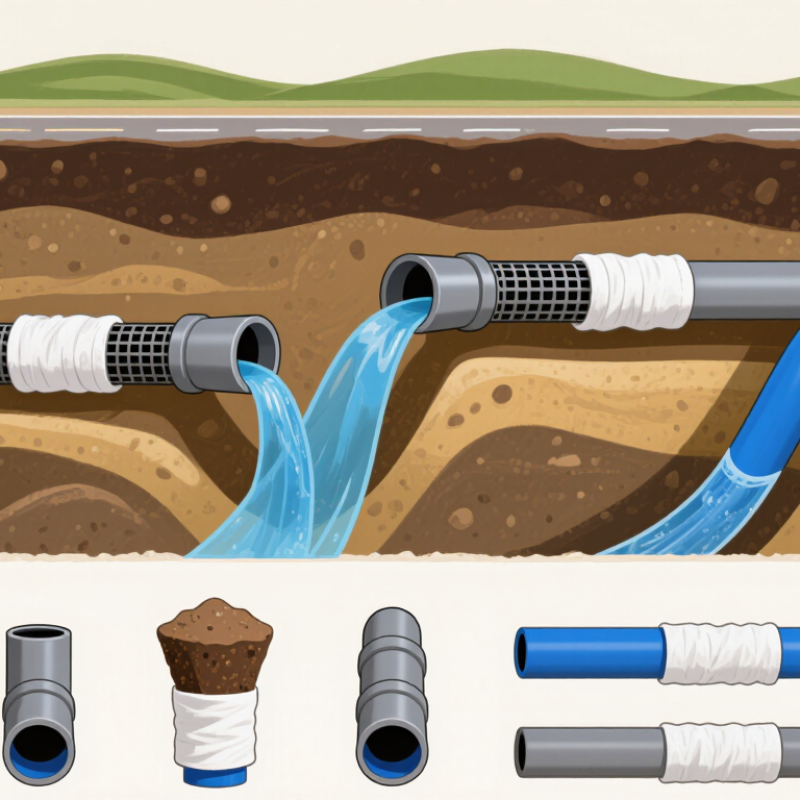
Plastic blind drains are slim drainage elements installed out of sight, often beside retaining walls, foundations, or beneath landscaped areas. Unlike a gravel trench, they use a molded plastic core wrapped in a permeable geotextile. The fabric lets water enter while limiting soil particles from clogging the channels. Water then travels through the core toward a suitable outlet. Water moves sideways.

The core may have a dimpled, net-like, or cuspated shape that creates small flow paths. As groundwater presses against the drain, the fabric filters it and the core carries it downward or laterally. A visible outlet pipe or drainage layer must receive that flow; the strip alone cannot remove water from a site. Installation details matter. The drain needs continuous contact with the intended wet zone, and joints should not leave gaps where soil can enter.

Designers match the drain’s flow capacity and compressive strength to expected water volume, soil pressure, and installation depth. Soil type matters, too: fine silt can behave differently from coarse sand. One detail is easy to underestimate: a crushed core or blocked outlet can undermine an otherwise careful installation. Product data helps, but site conditions deserve close inspection. Descriptions of blind drains sometimes make them sound foolproof. They are not.

A plastic blind drain typically uses a permeable geotextile to limit soil entry and a structured plastic core to provide a path for water. Water moves from surrounding soil through the filter, along the drain core, and out through a suitable outlet. The chart shows process order only; it does not represent measured flow rates or product performance.

Key Materials, Designs, and Applications

Plastic blind drains combine a water-carrying core with a design suited to the surrounding soil. Common materials include polyethylene and polypropylene, valued for their low weight and resistance to moisture. Some systems add a geotextile wrap to limit soil particles entering the drainage path. Material choice still depends on load, temperature, and exposure; plastic is not automatically the right answer for every site.

Tips: Check the drain’s flow capacity, crush resistance, and filter compatibility against project conditions. A neat-looking product can still clog if its wrap does not match the soil.

Designs range from corrugated pipes to flat panels and modular drainage channels. Their shapes affect installation space and how water reaches the outlet. Typical uses include retaining walls, foundations, landscaped areas, and sports grounds, where trapped water can weaken soil or damage finishes. Keep the outlet accessible for inspection. Small details matter. Poor gradients or blocked connections can undermine an otherwise sound system, and site conditions do not always match the drawing. A sample installation or technical review can reveal issues before they spread across the project.

China Top 10 Plastic Blind Drain Manufacturers - Key Materials, Designs, and Applications

Representative plastic blind-drain product configurations commonly used in civil engineering. The entries compare product types, not named companies or brands, and are not a verified ranking of manufacturers. Final materials, dimensions, and performance requirements should be specified for the project conditions.

No. Product Configuration Common Materials Design and Drainage Function Typical Applications Key Selection Considerations
1 Geocomposite drainage board HDPE or PP drainage core with a PP nonwoven geotextile filter A molded or structured core creates an in-plane drainage path; the filter fabric helps limit soil intrusion. Basement walls, retaining walls, foundations, and landscaped structures Compressive strength, drainage capacity under load, filter compatibility, and installation orientation
2 Geonet composite drain HDPE geonet core, commonly bonded to one or two PP geotextile layers Intersecting polymer ribs form continuous flow channels while the attached fabric separates soil from the core. Landfill drainage layers, cut-off walls, retaining structures, and civil works Flow capacity at the design gradient, long-term compression, chemical exposure, and filter selection
3 Strip or wick drain Polypropylene or HDPE core with a PP filter jacket A narrow, flexible drainage element provides a vertical path for pore water in soft, saturated ground. Ground-improvement projects involving soft clay and preloading or surcharge consolidation Core continuity, filter properties, installation damage resistance, and project-specific spacing and depth
4 Perforated plastic drainage pipe Perforated HDPE, PP, or PVC pipe; often paired with a geotextile filter or granular envelope Perforations admit water into the pipe, which conveys collected flow to an outlet or sump. Road edges, agricultural drainage, foundations, sports fields, and subsurface collection systems Pipe stiffness, perforation pattern, diameter, slope, filter design, and outlet access
5 Blind-drain strip with drainage core and filter fabric PP or HDPE core with a needle-punched PP nonwoven geotextile wrap A prefabricated narrow drain collects seepage along its length and directs it toward a collector or discharge point. Slopes, retaining walls, road subgrades, and confined drainage zones Required flow rate, soil retention, core resistance to crushing, and secure connection to the outlet
6 Three-dimensional drainage mat HDPE or PP cuspated or filament core with a geotextile filter layer The three-dimensional core provides a drainage void between soil and a structure, with the fabric acting as a filter. Green roofs, podium decks, foundation walls, and planter assemblies Drainage capacity, compressive behavior, root and soil compatibility, and waterproofing-system details
7 Tunnel and underground-structure drain sheet HDPE or PP drainage sheet, commonly used with geotextile and a collection pipe Channels seepage behind a lining or protective layer toward longitudinal drainage collectors. Tunnels, underground passages, cut-and-cover structures, and below-grade walls Water pressure, installation conditions, structural loading, joint detailing, and discharge arrangements
8 Landfill leachate drainage composite Chemically resistant HDPE drainage core with compatible geotextile filters Provides a drainage path for liquid collection above a liner system, subject to project-specific design. Landfill leachate collection and other contained waste-management facilities Chemical compatibility, sustained compressive load, clogging resistance, and regulatory design criteria
9 Roadway edge and subgrade drainage composite Polymer drainage core with PP geotextile filter; HDPE and PP are common core polymers Intercepts subsurface water and carries it toward a longitudinal drain or designated outlet. Highway shoulders, pavement edges, embankments, and transportation infrastructure Traffic-related loading, soil gradation, freeze-thaw conditions, outlet maintenance, and installation protection
10 Sports-field and landscape drainage system Perforated HDPE or PP pipes, geotextile filters, and compatible polymer drainage components A network of collection lines conveys water from the root zone or surface layer to a suitable outlet. Sports fields, parks, golf courses, and landscaped areas Soil or root-zone permeability, pipe layout, required drawdown, maintenance access, and outlet capacity

China’s Plastic Blind Drain Manufacturing Landscape

China’s plastic blind drain manufacturing landscape brings together polymer extrusion, perforation, and filter-fabric wrapping. Manufacturers may offer flat panels, coils, or modular drainage sheets for different site conditions. Production checks often cover wall thickness, slot spacing, roll width, and visible defects. Small variations matter. Narrow or uneven slots can restrict water entry, while unsuitable fabric may clog in fine soil. Capabilities vary between factories, so catalog images alone cannot show process control or product consistency. The market is not uniform.

Tips: Request a physical sample and a datasheet with dimensions, material details, and flow-test conditions. Check that the drain fits the soil and installation plan. Ask how batches are inspected. A vague answer is worth noting.

For buyers comparing suppliers, clear specifications make discussions more useful. Confirm whether the core and filter layer are tested together, not only as separate materials. Ask how products are protected from crushing during storage and transport; a deformed coil can be difficult to install. Custom sizing may help on unusual projects, but it can also create longer lead times. That trade-off deserves a candid conversation. Factory visits or independent inspections can provide added confidence, though neither replaces checking performance requirements for the intended site.

Criteria for Evaluating Leading Manufacturers

China Top 10 Plastic Blind Drain Manufacturers

Criteria for Evaluating Leading Manufacturers

A reliable comparison starts with performance, not catalog claims. Check drainage capacity under load, compressive strength, filter-fabric retention, and resistance to clogging. Ask for test conditions, including applied pressure and water gradient; results without these details are hard to compare. ASTM D4716 provides a method for measuring flow in-plane through geosynthetics. A useful supplier should share relevant test reports and explain how product results fit your soil and installation conditions.

Manufacturing consistency matters too. Review resin specifications, production controls, batch traceability, and inspection records. PlasticsEurope’s 2024 report estimates global plastics production at 413.8 million tonnes in 2023. That broad figure is not a drain-product benchmark, but it underscores the scale of the materials supply chain—and why buyers should verify material quality rather than assume it. Request samples and independent test results where practical. A polished datasheet is reassuring; it may still fail to reflect field conditions.

Tips: Compare like with like. Request the same load and flow test conditions from each manufacturer, then check sample thickness and fabric bonding by hand. Ask how performance changes after installation. Small details matter.

Profiles of 10 Chinese Plastic Blind Drain Manufacturers

Profiles of Chinese plastic blind-drain manufacturers vary more by production focus than by catalog language. China’s National Bureau of Statistics recorded 74.885 million tonnes of plastic-product output in 2023, down 3.0% year over year; that broad figure does not measure blind-drain capacity. It does show why buyers should verify product-level data. One profile centers on HDPE extrusion; another on molded drainage boards. A third specializes in perforated pipes, while a fourth bonds geotextile filters to drain cores. Others focus on custom dimensions, export orders, small production runs, civil-engineering projects, recycled-content formulations, or in-house testing. These are useful distinctions, not proof of quality.

Ask each supplier for flow-rate results under stated compressive loads, filter-opening data, resin specifications, and dimensional tolerances. Check whether test samples match the delivered product. Small details matter: a crushed core or clogged filter can undermine drainage on site. Look closely. A capable factory may still provide thin documentation, and a polished catalog cannot replace batch records. The ten profiles are best treated as sourcing leads, not an audited ranking; independent factory checks remain necessary. Even this comparison has a weakness: public production statistics rarely separate blind drains from other plastic products.