
10 Best Bobbin Winders for Sewing Machines in 2026
A well-wound bobbin helps keep stitches even and reduces interruptions during a sewing project. Yet not every sewer needs the same tool. Some machines include a dependable built-in winder, while others benefit from a separate unit for faster, more convenient winding. Small details matter: a stable base, an easy-to-follow thread path, and a clear stop mechanism can make a real difference at the worktable.
This guide to the 10 best bobbin winders for sewing machines in 2026 compares options for different machines, budgets, and sewing habits. We consider winding consistency, ease of setup, portability, build quality, and the bobbin sizes each model supports. Compatibility deserves a close look. A winder may appear universal, but spool shapes and bobbin dimensions vary between brands and models.
Check the specifications.
Product features and availability can change, so confirm compatibility with the manufacturer before buying. A fast motor is not always the best choice if it winds unevenly or feels awkward to use. Likewise, a compact design may save space but offer less stability on a crowded table. There is no perfect pick for everyone; even a highly rated winder may not suit your machine or workflow. The recommendations below aim to make the trade-offs clearer, so you can choose a practical tool with fewer surprises and spend more time sewing.
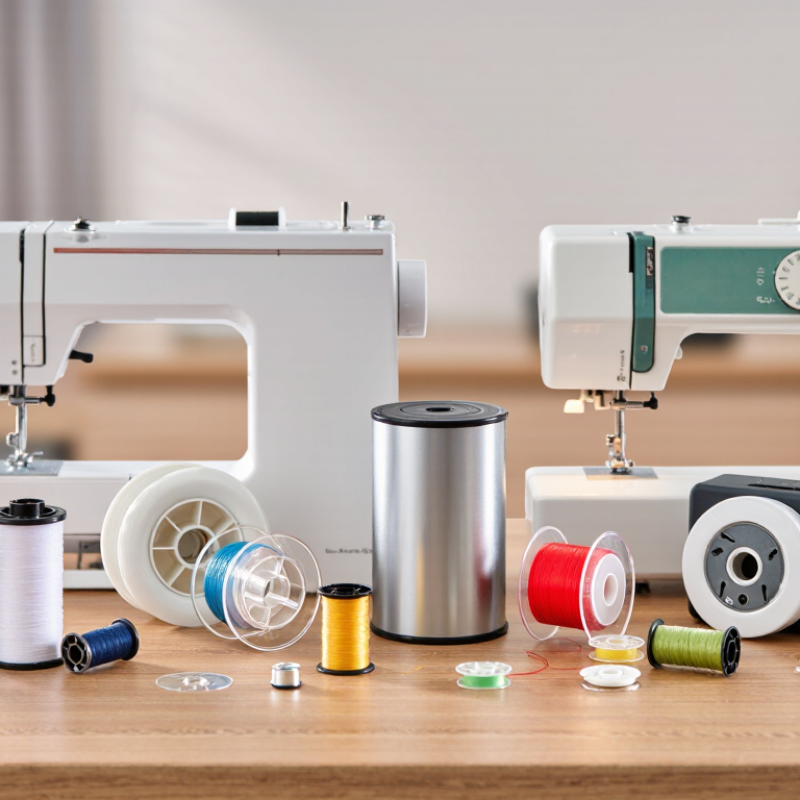
Identify Bobbin-Winder Types and Compatible Bobbin Systems
Bobbin winders generally fall into two groups: built-in units and standalone winders. A built-in winder uses the machine’s drive, while a standalone model winds bobbins separately. Neither type guarantees a fit. The bobbin system must match the machine’s hook and bobbin case. Common systems include top-loading, front-loading, and several bobbin sizes, such as Class 15 and Class 66. Similar-looking bobbins can differ in height, rim shape, or material. Small differences matter.
ISO 4915:1991 classifies stitches into six groups; Class 300 covers lockstitches, which use needle and bobbin threads. That classification helps explain why bobbin tension and thread delivery matter, but it does not specify bobbin dimensions. Check the machine manual for its exact bobbin type and winding direction. One detail is easy to miss: a bobbin that fits the spindle may still be wrong for the hook. I would verify both before buying.
Tips: Wind a test bobbin slowly. Watch for even thread layers and a clean stop. If the thread piles up on one side, check the bobbin’s seating and the winder’s tension guide. Don’t assume a universal bobbin will work.
10 Best Bobbin Winders for Sewing Machines in 2026 - Identify Bobbin-Winder Types and Compatible Bobbin Systems
| Pick | Bobbin-Winder Type | Best For | Bobbin System to Check | Compatibility | Key Buying Check |
|---|---|---|---|---|---|
| 1. Best for everyday home sewing | Built-in, machine-driven winder | Regular sewing with a domestic machine | The bobbin specified for the exact machine model; common domestic systems include Class 15, Class 15J, and Class 66 | Designed to wind the bobbin system assigned to that machine. Bobbins that look similar may not be interchangeable. | Confirm the bobbin part number and follow the machine manual for threading and winding direction. |
| 2. Best for a top-loading machine | Built-in winder paired with a drop-in bobbin case | Machines whose bobbin sits horizontally beneath a clear or removable cover | Often Class 15 or Class 15J, depending on the machine | Top-loading construction alone does not identify the bobbin class; use the model-specific specification. | Check the bobbin’s diameter, height, center opening, and stated class—not just its appearance. |
| 3. Best for a front-loading machine | Built-in winder paired with a removable bobbin case | Machines where the bobbin is inserted into a case accessed from the front or side | Commonly Class 15 or Class 66, but the correct system varies by machine | The bobbin case and machine determine the required bobbin; front-loading does not guarantee one universal class. | Verify the machine manual or parts list before purchasing replacement bobbins. |
| 4. Best for an older machine | Original or model-matched built-in winder | Older domestic machines with a dedicated winding spindle or drive mechanism | The machine’s specified bobbin class; older models may use systems that differ from current common types | A replacement winder must match the machine’s mounting and drive arrangement, as well as the bobbin. | Check spindle dimensions, mounting points, drive contact, and model-specific parts information. |
| 5. Best for light industrial sewing | Machine-mounted industrial winder | Industrial machines that wind bobbins using a fitted spindle and machine drive | Typically an L-style or M-style industrial bobbin, as specified for the machine | L and M are different industrial bobbin systems; the machine’s hook and bobbin case determine the correct one. | Match the bobbin type and winder assembly to the machine model and hook system. |
| 6. Best for a separate work station | Standalone electric bobbin winder | Winding spare bobbins without occupying the sewing machine | Only the bobbin classes supported by the winder’s spindle or supplied adapters | “Universal” does not necessarily mean every bobbin fits; compatibility depends on spindle size, bobbin shape, and adapter. | Look for a clearly listed supported bobbin-size range and a secure, correctly sized spindle. |
| 7. Best for occasional winding | Manual or hand-crank winder | Simple setups, travel kits, or users who do not need an electric winder | The bobbin must fit the winder’s spindle; machine bobbin compatibility is a separate check | Manual operation does not make the winder compatible with every bobbin system. | Check that the bobbin sits firmly and that the thread guide allows even winding. |
| 8. Best for winding several bobbins in advance | Standalone electric winder with adjustable speed | Users who prepare multiple bobbins before a sewing project | Supported domestic or industrial bobbin sizes, as listed by the manufacturer | Speed control can help manage winding, but it does not change which bobbins fit. | Check for a controllable speed range, a stable base, and a bobbin-compatible spindle. |
| 9. Best for frequent industrial use | Dedicated industrial standalone winder | Workrooms that wind compatible industrial bobbins separately from the sewing machine | Specified industrial system, commonly L-style or M-style | Industrial winders are not automatically compatible with domestic Class 15 or Class 66 bobbins. | Confirm the exact bobbin size, spindle fit, power requirements, and intended duty cycle. |
| 10. Best for replacing a worn assembly | Replacement winder assembly for a specific machine | Repairing a machine whose original winding mechanism is damaged or worn | The bobbin system required by the machine being repaired | The replacement must match the machine’s model and mechanical layout; a standalone winder is not a direct substitute for a built-in assembly. | Compare the part number, mounting arrangement, spindle, and drive mechanism with the original assembly. |
Compatibility tip: Class 15, Class 15J, Class 66, L-style, and M-style describe different bobbin systems. Check the sewing-machine manual or official parts specification before buying bobbins or a replacement winder; visual similarity is not proof of interchangeability.
Related Posts
-
How to Choose the Best Weaving Bobbin Winder?
-
How to Choose the Best Bobbin Winder Machine for Your Sewing Needs
-
Top China Best Bobbin Winder for Your Sourcing Needs?
-
How to Choose Bobbin Winders in 2026?
-

2026 Best Bobbin Winder for Global Buyers and Suppliers?
-
How to Choose the Best Bobbin Winder Sewing Machine for 2026?