What Are the Top 10 Thread Winding Machine Types?
A thread winding machine may look simple from a distance: a motor turns a package while thread feeds across its surface. In practice, winding quality depends on tension, traverse motion, package shape, and the material being handled. A small change in any one of these can affect consistency, unwinding, and downstream production. Details matter.
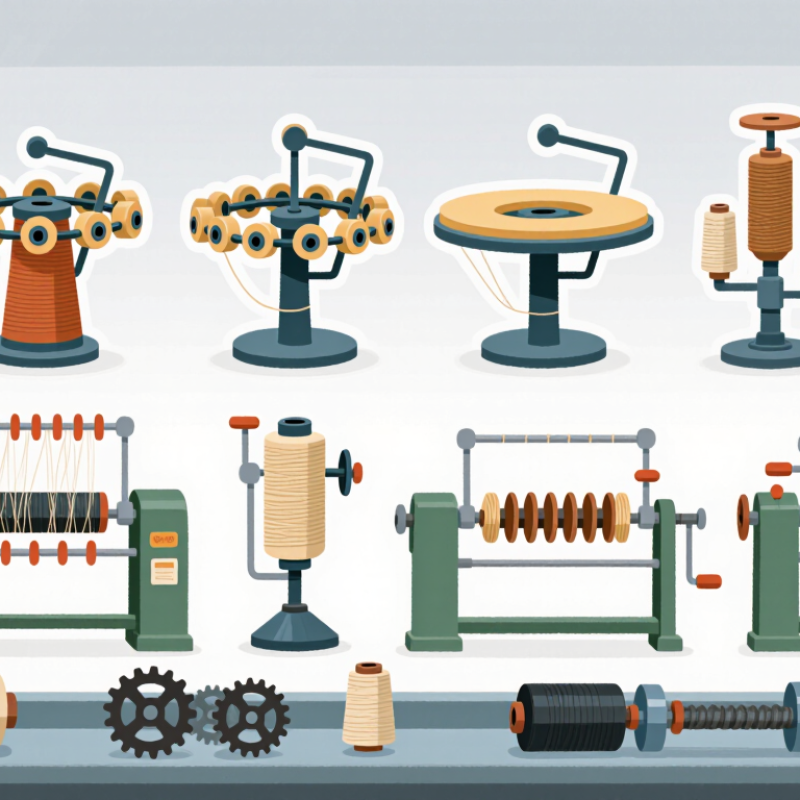
The phrase “thread winding machine” covers equipment built for different winding patterns and package needs. Some machines form precise, layered packages; others wind quickly with less exact placement. You may encounter cone, bobbin, cheese, flyer, spindle, sectional, and traverse winding designs, among other types. Their names can overlap across suppliers, so compare operating principles rather than relying on labels alone.
This guide examines ten common thread winding machine types and explains what distinguishes them. It considers suitable thread materials, package formats, production priorities, and practical trade-offs. A machine suited to a small workshop may not fit a continuous production line. Nor does a higher speed automatically mean a better result. Operators should also check tension control, changeover time, maintenance access, and the quality of the finished package. Even a detailed specification sheet may leave questions about real-world performance. That deserves a closer look. Use the comparisons as a starting point, then confirm requirements with equipment documentation and qualified suppliers.
What Is a Thread Winding Machine and How Does It Work?
A thread winding machine transfers yarn from a supply package onto a form suited to the next process, such as knitting, weaving, or sewing. It controls yarn tension and guides the strand across a rotating bobbin or cone. A traverse guide lays the yarn in orderly layers, while sensors may detect breaks or irregular tension and stop the machine. The result is a package designed to unwind smoothly, not merely a larger bundle of thread.
The operating principle is simple. Yarn feeds through guides and a tensioning device, then winds onto a rotating package as the guide moves back and forth. Speed, traverse pattern, and package shape affect density and unwinding behavior. Precision and random winders differ in how they coordinate package rotation and yarn movement; cone, cheese, and cop winding describe common package forms. These categories can overlap, so “top 10 types” depends on whether you classify machines by winding method or output.
Scale makes consistency important. Textile Exchange’s Materials Market Report 2024 estimates that global fiber production reached 124 million tonnes in 2023, up from 116 million tonnes in 2022. That figure describes fiber, not winding-machine output, but it shows the vast material flow that yarn preparation serves. Small details count. In practice, a package that looks even can still unwind poorly if tension or edge build is wrong. Operators need to check package shape and yarn behavior, not rely on appearance alone.
How Are Thread Winding Machines Classified?
Thread winding machines are best classified by the package they make, the winding pattern, and the level of automation. These categories describe function more clearly than machine names alone. A precision winder places turns in controlled layers, while a random winder builds a less ordered package at higher speed. Cross-winding machines create angled yarn layers that help the package unwind smoothly. The right choice depends on yarn type, package size, and downstream use.
Package form adds another distinction. Machines can wind onto cones, tubes, spools, or larger dye packages. Some are designed for sewing thread; others handle industrial yarn or prepare packages for weaving and knitting. Automation provides a further split: manual and semi-automatic models need operator attention, while automatic winders can handle tasks such as yarn joining and package changes. ITMF’s International Textile Machinery Shipment Statistics reported about 1.4 million automatic-winder units shipped worldwide in 2022, a 20% decline from 2021. That figure tracks equipment shipments, not every winding-machine type. Useful context, but not a complete market map. In practice, compare winding speed, tension control, package density, and changeover time; a neat-looking package can still unwind poorly.
How Do These Machine Types Differ in Design and Application?
Thread winding machines differ mainly in how they lay yarn and shape the package. Precision winders place each turn at a controlled angle, while random winders use faster, less fixed traverses. Cross-winding reduces slippage and suits cones or cheese packages. Parallel winding builds compact spools and bobbins, but may need careful unwinding control. Hank winders form loose loops for dyeing. Automatic multi-spindle models handle repeated production with less manual handling. These labels can overlap: a cone winder, for example, may use precision or random winding.
Application determines the right design. Sewing thread often needs even tension and a smooth package; industrial yarn may prioritize package size and stable unwinding. Textile Exchange’s Materials Market Report 2024 estimates global fiber production reached 124 million tonnes in 2023, with 160 million tonnes projected by 2030. This signals a growing material base, not a direct forecast for winding-machine sales. In practice, test the actual yarn: elastic thread can stretch, flatten, or break under settings that work for rigid yarn. A neat package is not always a usable one.
Tips: Check traverse width, tension range, package dimensions, and unwind direction against your downstream process. Run a short trial and inspect the inner layers, too. They are easy to overlook.
How Can Manufacturers Choose the Right Thread Winding Machine?
Choosing the right thread winding machine starts with the finished package, not the machine’s advertised speed.
A cone for knitting may need different winding from a small bobbin for sewing. Consider thread material, package shape, target weight, and how the package will unwind. Precision, random, parallel, cross-winding, cone, spool, bobbin, hank, cop, and automatic systems serve different production needs. The labels can overlap, so check the actual winding method.
Match the machine’s tension range and control features to your thread. Delicate filaments may break under uneven tension, while bulky yarn can require more clearance and a stronger drive. Check changeover time, available floor space, operator training, and access to replacement parts. Ask for a trial using your own thread, then inspect package density and unwinding performance. A neat catalog comparison can still mislead; real material behaves differently at full speed.
Tips: Record breakage, package weight, and changeover time during the trial. Keep a sample package for comparison. If production varies, a flexible machine may be worth more than maximum speed. That trade-off is easy to underestimate.