Weavetech

How to Choose Yarn for Weaving?

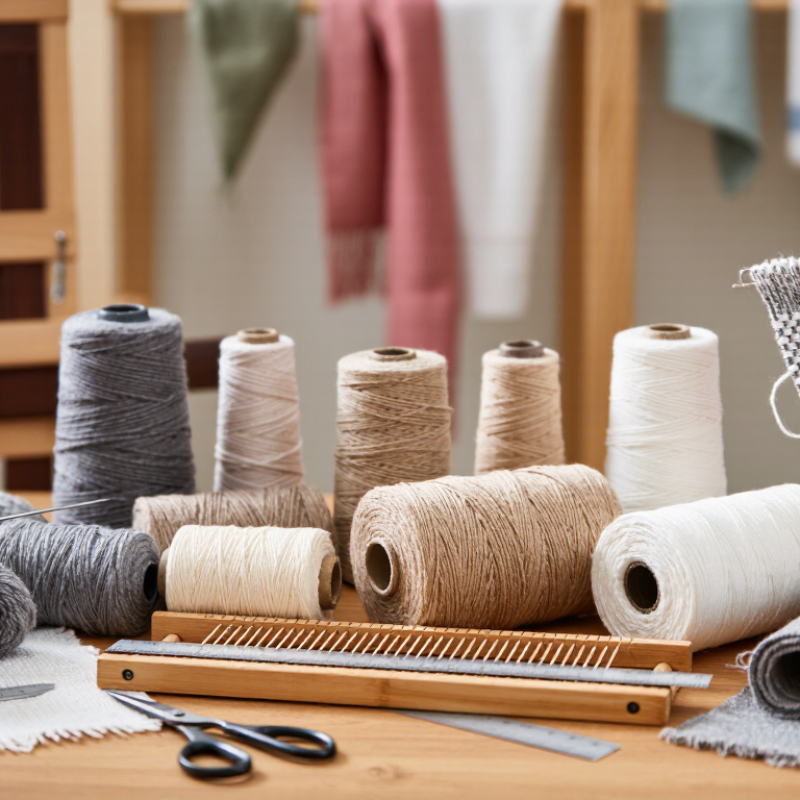
Choosing yarn for weaving is more than matching a beautiful color to a project. The fiber, twist, thickness, and finishing method all influence the fabric’s behavior. A soft wool may create warm scarves, while linen can produce crisp towels with excellent absorbency. Cotton offers reliable structure, but some cotton yarns may feel stiff after weaving. These differences become obvious at the loom.

Yarn weaving also depends on sett, or the number of warp ends placed within an inch. A thick yarn needs more space than a fine yarn. If the sett is too tight, the fabric may become rigid or difficult to beat. If it is too loose, gaps can weaken the design. Checking the yarn label helps, but it cannot replace a small sample. Make one.

Experienced weavers often test yarn before committing to several meters of warp. Wind a short sample, weave a few inches, and wash it as the finished textile will be washed. Observe shrinkage, drape, fuzz, color bleeding, and edge stability. These details reveal problems that specifications may hide. A perfect choice on paper can still disappoint at the loom.

Consider the project’s purpose, too. Durable wool suits rugs, while smooth cotton may serve kitchen cloths. For clothing, comfort and movement matter more than visual texture alone. I have learned that “natural” does not always mean “best.” Personal preference, budget, care requirements, and available tools should guide the final decision. The right yarn supports both the design and the weaver’s confidence.
How to Choose Yarn for Weaving?

Classify Weaving Yarns by Fiber, Structure, and ISO 2060 Linear Density

How to Choose Yarn for Weaving?

Weaving yarns can be classified by fiber, structure, and ISO 2060 linear density. Fiber affects touch, strength, moisture response, and shrinkage.

Cotton offers a dry hand and stable handling. Wool adds warmth, elasticity, and a softer surface. Linen feels cool but may break during tight weaving. Silk is smooth and lustrous, while synthetic fibers often provide high abrasion resistance. Blended fibers can balance these traits, though their shrinkage may be difficult to predict.

Structure matters on the loom. Spun yarn contains shorter fibers and usually creates a textured, familiar surface. Filament yarn is smoother and can produce clean, reflective cloth. Textured yarn adds bulk and stretch. Core-spun yarn combines a central filament with an outer fiber layer.

For warp yarns, I check abrasion resistance and elongation first. Weft yarns allow more freedom, but excessive fuzz can hide the pattern.

ISO 2060 measures linear density by mass per length. Tex means grams per 1,000 meters. Dtex means grams per 10,000 meters. A higher value normally indicates a heavier yarn, but twist and fiber density also influence its behavior.

I record the yarn count, twist, moisture condition, and breakage during a small loom trial. My first selection is not always correct. A yarn that looks strong may shed, stretch, or tighten after washing.

Test the actual fabric, not only the package data. Thin yarns may reveal delicate detail. Thick yarns create weight and visual emphasis.

Match Yarn Count, Twist, and Diameter to Weave Sett and Fabric Density

How to Choose Yarn for Weaving?

Match Yarn Count, Twist, and Diameter to Weave Sett and Fabric Density

Choosing yarn for weaving begins with the relationship between yarn size and weave sett. A finer yarn usually permits more ends per inch, creating a dense, smooth fabric. A thicker yarn needs more space, or the cloth may become stiff and crowded. Yarn count helps estimate size, but diameter shows the practical result. Lofty yarns can occupy more space than their count suggests. Do not ignore that difference.

Twist also changes fabric behavior. High-twist yarn often looks slimmer, feels firmer, and resists abrasion. Low-twist yarn may appear fuller, softer, and less stable during weaving. I usually compare twist, count, and measured diameter together before setting the reed. A simple sett calculation can provide a starting point, but it cannot replace a woven sample. Beat gently and consistently. After washing, the yarn may bloom, shrink, or relax. I have sometimes chosen a sett that looked correct on paper, then found the cloth too dense after finishing.

Tips: Wrap the yarn around a ruler for one inch and note its actual coverage. Weave a small sample using the planned sett. Check gaps, hand feel, edge stability, and drape. If the fabric feels rigid, reduce the sett or choose a softer twist. If it looks loose, increase the sett carefully. Record every adjustment. Your notes may reveal a pattern that calculations miss.

How to Choose Yarn for Weaving?

Match yarn count, twist, and diameter to weave sett and fabric density.

Finer yarns with higher counts and smaller diameters allow a closer sett, while coarser yarns require fewer ends and picks per inch. Twist values shown are typical cotton-yarn ranges used to balance strength, abrasion resistance, and fabric handle. The recommended sett should be adjusted for weave structure, loom tension, and the desired cover factor.

Compare Yarn Strength and Elongation Using ASTM D2256 Test Data

How to Choose Yarn for Weaving?

Compare Yarn Strength and Elongation Using ASTM D2256 Test Data

Choosing weaving yarn requires more than checking its fiber type or visual softness. ASTM D2256 measures yarn tensile properties through a single-strand test. It records breaking strength and elongation under controlled conditions.

Compare samples tested with the same gauge length, loading rate, pretension, and conditioning process. Otherwise, the numbers may appear comparable but describe different test situations. Breaking strength shows how much force the yarn withstands before failure. Elongation shows how far it stretches before breaking.

A strong yarn with very low elongation may resist tension, yet feel harsh during weaving. A highly extensible yarn may absorb movement but create unstable fabric edges.

Look beyond the highest value.

For loom work, examine the balance between strength and elongation. Warp yarn usually needs dependable tensile resistance and consistent behavior under repeated tension. Weft yarn may allow more flexibility, depending on the fabric structure. Also inspect variation between specimens, not only the average result. A large spread can signal uneven spinning, moisture differences, or weak sections.

Test data has limits. ASTM D2256 does not fully predict abrasion resistance, fuzz formation, sizing response, or performance on a specific loom. A yarn may pass the tensile test and still break during shedding. That gap deserves attention.

In practice, combine laboratory results with a small weaving trial, checking tension marks, broken ends, and fabric recovery. My judgment would not rely on one number alone. Even careful testing can miss what happens after hours of friction.

Select Yarn Moisture and Conditioning Requirements Under ISO 139

How to Choose Yarn for Weaving?

Yarn moisture conditioning can change weaving results more than expected. Under ISO 139, the standard atmosphere is generally 20 ± 2°C and 65 ± 4% relative humidity. Tropical testing uses 27 ± 2°C and the same humidity range. Check the applicable test method before setting your laboratory conditions.

At this humidity, many yarns become more flexible and less prone to static buildup. Excess moisture can increase yarn swelling, friction, and dimensional change. Very dry yarn may feel harsh, break easily, or create more fly during weaving. Store yarn in sealed, clean packaging before conditioning. Then expose it to the required atmosphere until its moisture condition is stable.

I do not choose yarn by touch alone. That habit has caused uneven tension in real weaving trials. Record temperature, relative humidity, yarn count, and visible changes before testing. Compare strength, elongation, hairiness, and abrasion after conditioning. Natural fibers often respond strongly to humidity, while synthetic fibers may show smaller changes. Blended yarns can behave unpredictably.

Keep the room consistent.

A practical mistake is conditioning only the yarn surface. Thick packages may need longer exposure than loose skeins. Measure several samples from different package locations. If results conflict, inspect package density, winding tension, and moisture history. ISO 139 gives the atmosphere, but the yarn structure still determines performance.

How to Choose Yarn for Weaving? - Select Yarn Moisture and Conditioning Requirements Under ISO 139

Yarn Fiber Type Typical Moisture Regain at Standard Atmosphere (%) Moisture Behavior Recommended Conditioning Approach Weaving Selection Guidance ISO 139 Testing Note
Cotton Approximately 8.5 Hygroscopic; absorbs and releases moisture at a moderate rate. Condition in the standard atmosphere until the yarn reaches moisture equilibrium. Avoid testing immediately after humidification or drying. A good general choice when stable yarn tension, moderate flexibility, and reduced static are required. Use 20 ± 2 °C and 65 ± 4% relative humidity for standard textile conditioning and testing.
Flax Approximately 12.0 High moisture regain; moisture can noticeably affect flexibility and handling. Allow sufficient time for equilibrium, particularly after storage in a dry environment. Handle consistently between conditioning and weaving. Suitable for breathable fabrics; conditioning helps reduce brittleness and improves weaving behavior. Record laboratory temperature and relative humidity because natural-fiber properties are moisture-sensitive.
Wool Approximately 16.0 Highly hygroscopic; moisture regain strongly influences mass and dimensional behavior. Condition gradually to avoid rapid environmental changes that may affect crimp, bulk, and dimensions. Useful where warmth, elasticity, and moisture buffering are important; maintain consistent humidity for reliable tension. Do not compare mass or strength results unless all specimens have been conditioned under the same atmosphere.
Viscose Approximately 13.0 Absorbs moisture readily; wet and dry performance can differ significantly. Condition thoroughly before testing and protect the yarn from uncontrolled humidity changes during handling. Choose for soft handle and absorbency; control moisture to limit changes in strength, elongation, and tension. Use conditioned specimens when evaluating yarn count, breaking force, elongation, or fabric mass.
Silk Approximately 11.0 Moderately hygroscopic; moisture affects mass, handle, and dimensional stability. Condition in a clean, stable atmosphere and minimize exposure to fluctuating humidity before weaving. Appropriate for lightweight, smooth fabrics where controlled tension and consistent yarn size are essential. Keep specimen preparation and conditioning consistent because small mass differences may influence calculated results.
Polyamide Approximately 4.5 Moderately moisture-sensitive compared with other common synthetics. Condition to equilibrium before comparing strength, elongation, or yarn linear density. Useful when abrasion resistance and flexibility are needed; monitor humidity for repeatable performance. Standard conditioning is recommended even though moisture sensitivity is lower than that of cellulosic fibers.
Polyester Approximately 0.4 Very low moisture regain; dries quickly but may accumulate static. Condition under the standard atmosphere to equalize temperature and surface moisture before testing. Suitable for dimensional stability and quick-drying fabrics; antistatic control may be needed during weaving. Conditioning remains necessary for comparable laboratory results, even when moisture regain is low.
Acrylic Approximately 1.5 Low moisture regain; moisture changes are generally smaller than for natural fibers. Condition before testing to stabilize temperature, handling characteristics, and electrostatic behavior. Choose for lightweight warmth and color versatility; check static and friction during high-speed weaving. Maintain the prescribed atmosphere when comparing results across different production lots.
Polypropylene Approximately 0.0 Essentially non-hygroscopic; moisture has little effect on mass but can affect static conditions. Allow specimens to reach the standard temperature and humidity before testing, even when moisture regain is negligible. Appropriate for low-moisture applications; manage static electricity and friction during yarn processing. Use the same ISO 139 atmosphere for consistent test comparability and reporting.
ISO 139 conditioning reference: The standard textile atmosphere is typically 20 ± 2 °C and 65 ± 4% relative humidity. Condition yarn specimens until they reach moisture equilibrium before testing. The moisture regain values shown are commonly used approximate reference values and may vary with fiber grade, blend ratio, yarn structure, finishing, and test method.

Evaluate Abrasion Resistance, Cost, and End-Use Performance Before Weaving

How to Choose Yarn for Weaving?

Yarn selection should begin with the fabric’s working life, not its color. A kitchen towel, upholstery panel, and lightweight scarf face very different stress. I check abrasion resistance through ISO 12947 Martindale testing or ASTM D3884 methods. Higher cycle results usually indicate better surface durability, but they do not guarantee performance on every loom. Test it wet.

The Textile Exchange Materials Market Report 2024 records 124 million tonnes of global fiber production in 2023. It projects approximately 160 million tonnes by 2030. This growth increases material choice, but also complicates responsible purchasing. Compare yarn cost per usable meter, not only cost per kilogram. A low-priced yarn may create more waste through breakage, sizing problems, or slow weaving. Include labor, setup time, and finishing losses in the calculation. Cost is only one variable.

End-use performance should guide the final decision. For high-friction fabric, choose yarn with suitable tensile strength, twist stability, and resistance to fuzzing. For soft apparel, excessive twist may reduce comfort. The International Textile Machinery Federation’s industry surveys repeatedly identify energy and raw-material costs as major production pressures. That makes efficiency important, yet cheaper yarn can become expensive after repeated loom stops. I would record break frequency, visible abrasion, dimensional change, and hand feel from a small trial warp. One trial is not proof. Humidity, reed density, and loom tension can distort the result, so repeat testing before committing to a larger weave.